The basic periodontal exam (BPE) is a screening tool used to identify if a periodontal tissue requires further examination.
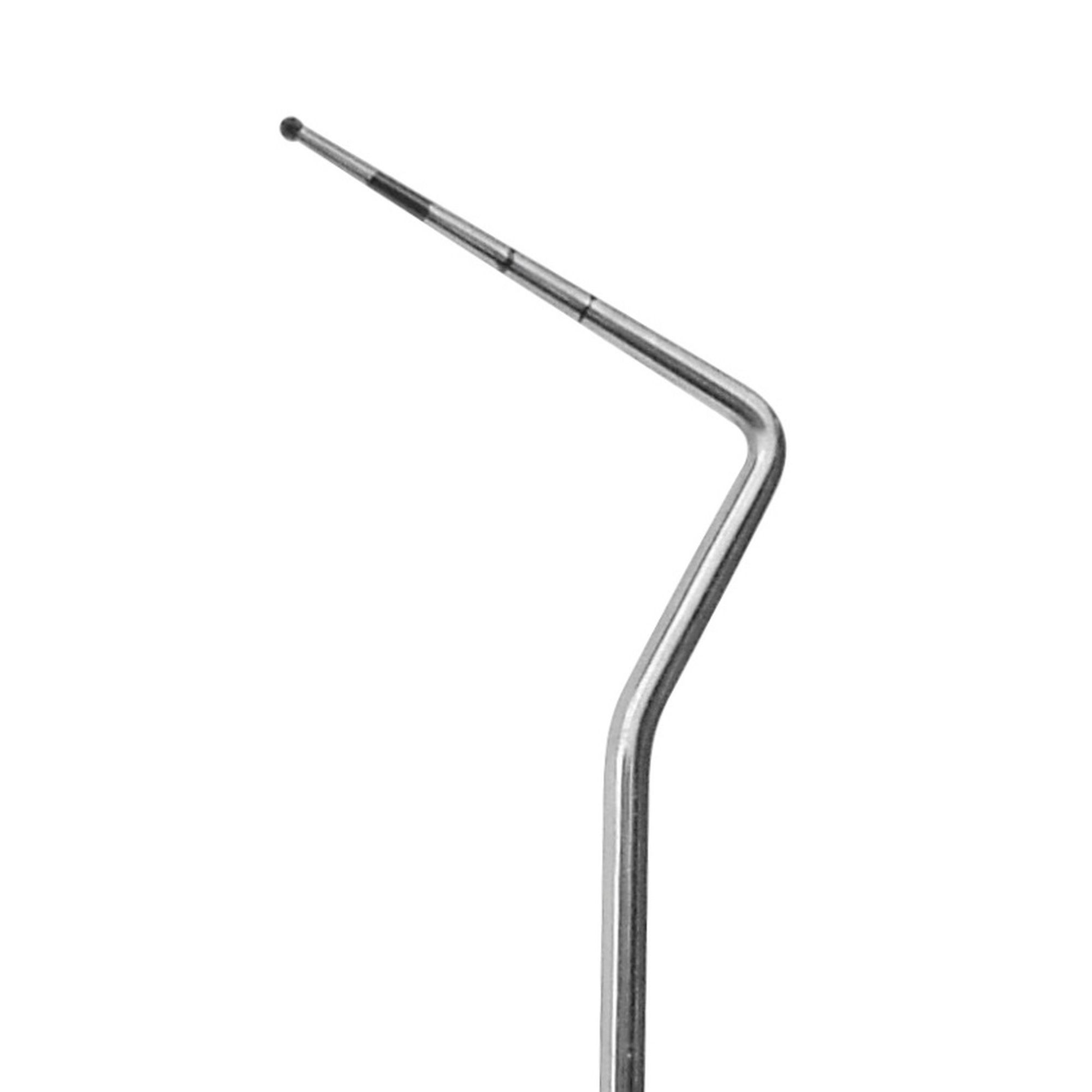
A World Health Organisation (WHO) probe is used.
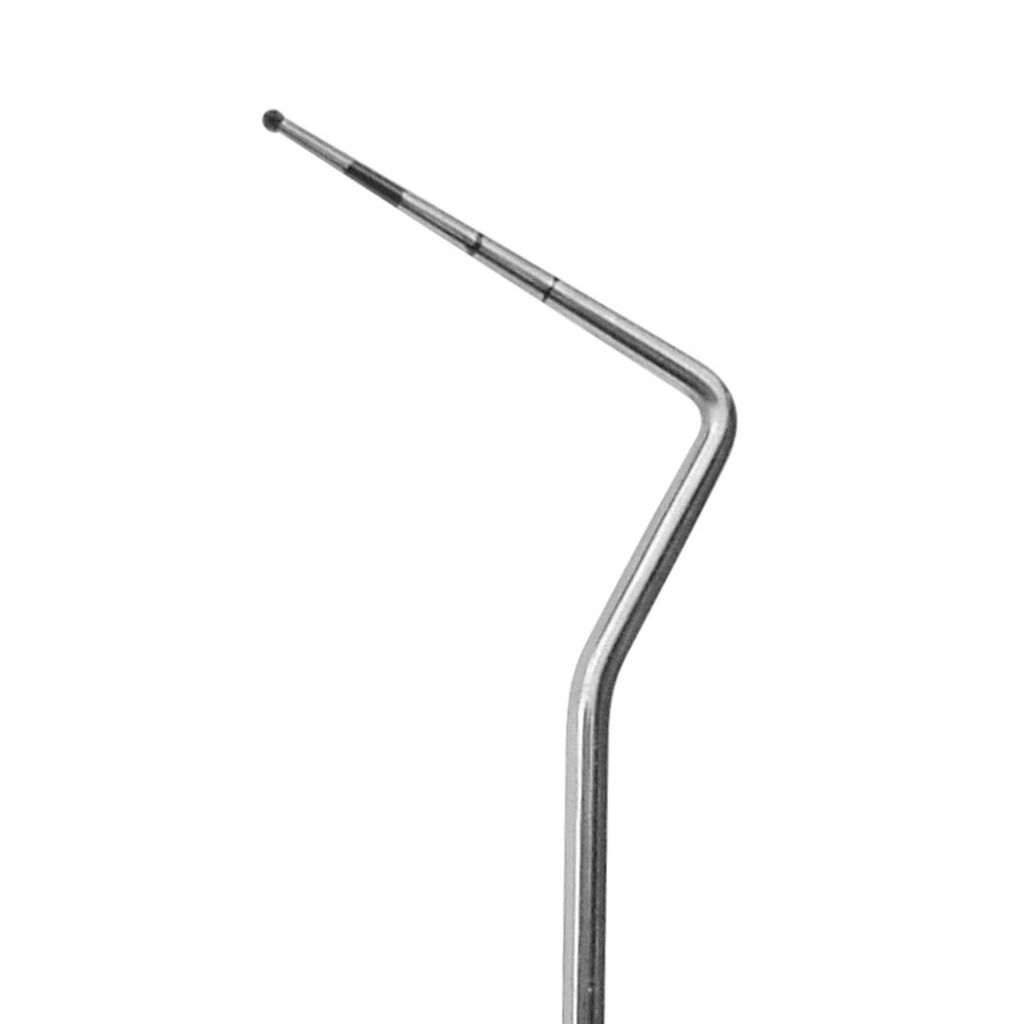
WHO Probe 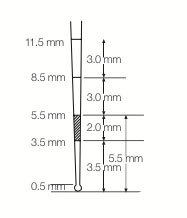
Method
- The dentition is divided into sextants
- A WHO probe is ‘walked around’ the teeth in each sextant.
- A score is assigned to each sextant based on the BPE scoring code – the highest score is used.
- BPE Scoring Codes
- 0 – pockets less than 3.5mm
- No calculus/overhangs, no bleeding on probing
- 1 – pockets less than 3.5mm
- No calculus/overhangs, bleeding on probing
- 2 – pockets less than 3.5mm
- supra/subginigval calculus/overhangs
- 3 – probing 3.5-5.5mm
- 4 – probing >5.5mm
- * – this symbol is added next to the BPE score to indicate ‘furcation involvement’
- 0 – pockets less than 3.5mm
- 3rd molars are not included unless 1st and/or 2nd molars are missing
- For a sextant to qualify for recording, at least 2 teeth must be within the sextant
A BPE should be performed for all new patients. Sextants scoring 0, 1 or 2 should be re-scored at every exam. Scores of 3 or 4 indicate further investigation is required, such as more detailed periodontal charting.
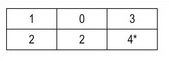
For Code 3: perform 6point pocket chart and start with OHI and identify and control risk factors. Radiographs should be taken.
For Code 4: complete full 6point pocket chart for the whole dentition. Radiographs should be taken
6 point pockets charts(6ppc) should be taken pre and post perio therapy.
If a maintenance phase is achieved 6ppc should be performed annually.
BPE should not be used around implants – 6ppc is required here.
Bleeding on probing should supplement 6ppc’s
Treatment according to a sextants BPE score
- 0 – No treatment indicated
- 1 – OHI
- 2 – OHI + sub/supragingival plaque removal
- 3 – OHI + sub/supragingival plaque removal and RSD
- 4 – OHI + RSD + consider specialist referral
- * – Treat according to BPE score and consider specialist referral
 dentalsmackers